

Reggaeton was not born in a big studio or at a record label. It was born in Panama in the late 1980s, grew up in Puerto Rico's housing projects in the '90s, was sold on cassettes out of car trunks, and in 2004 went around the world. Here is the short history, with the dates that matter.
Panama: reggae in Spanish (late 1980s)
The roots are in Panama. Workers from Jamaica and Barbados who came to build the Canal brought reggae with them, and their descendants began singing it in Spanish. One of the first known songs is "El D.E.N.I" by Panamanian artist Renato, about discrimination against English-speaking Black Panamanians.
The beat: dembow comes from Jamaica
The rhythm everyone recognizes today is called dembow. Jamaican dancehall producers created it in the late '80s and early '90s; credit usually goes to Steely & Clevie. Shabba Ranks made it famous with "Dem Bow," from his album Just Reality (1991). Elements of that track, along with Dennis the Menace's "Pounder (Dub Mix II)," appear in more than 80% of reggaeton productions.
If you want to know how dembow, perreo and Latin trap differ, we explain it here.
Puerto Rico: the underground (1990s)
In the early '90s the center moved to Puerto Rico. DJ Playero and DJ Nelson produced mixes that were copied onto cassette and sold hand to hand and out of car trunks. The most wanted were DJ Negro's The Noise and DJ Playero's volumes 37 and 38.
Not everyone was happy. In February 1995 police raided six record stores in San Juan and seized cassettes under obscenity laws, and the Department of Education banned the music from schools. That same year DJ Negro released The Noise 3 with a "non-explicit lyrics" label, and it was a hit.
The name came out of those years too. There are two versions: that Daddy Yankee used the word while freestyling on Playero 34 (1994), or that it came from DJ Erick's cassette Reggaetón Live Vol. 1 (1995), a blend of "reggae" and "maratón." By 1998, the sound had come together into what we now call reggaeton.
2004: the year everything changed
In 2004 Daddy Yankee released Barrio Fino, and "Gasolina" opened the door to the world. The same year brought Tego Calderón's El Abayarde, Ivy Queen's Diva, Wisin & Yandel's Motivando a la Yal and Don Omar's hits. In 2006, Don Omar's King of Kings debuted at No. 1 on Top Latin Albums. By 2008, reggaeton was the best-selling genre in Latin music.
Those songs still play today. "Gasolina" still shows up on the charts, as we covered in our story on the classics that never leave the party.
The second wave (2017 on)
In 2017 "Despacito," by Luis Fonsi featuring Daddy Yankee, hit a billion YouTube views in under three months, and J Balvin's "Mi Gente" confirmed that Spanish was no longer a barrier. In 2018 "Te Boté" reached No. 1 on Hot Latin Songs and Bad Bunny began rewriting the rules. In 2022, Un Verano Sin Ti became the second all-Spanish album to top the Billboard 200.
Today Bad Bunny has more billion-stream Spotify songs than any other artist, and Daddy Yankee, who opened the door in 2004, is the Latin Recording Academy's 2026 Person of the Year. From cassettes in a car trunk to that, in thirty years.
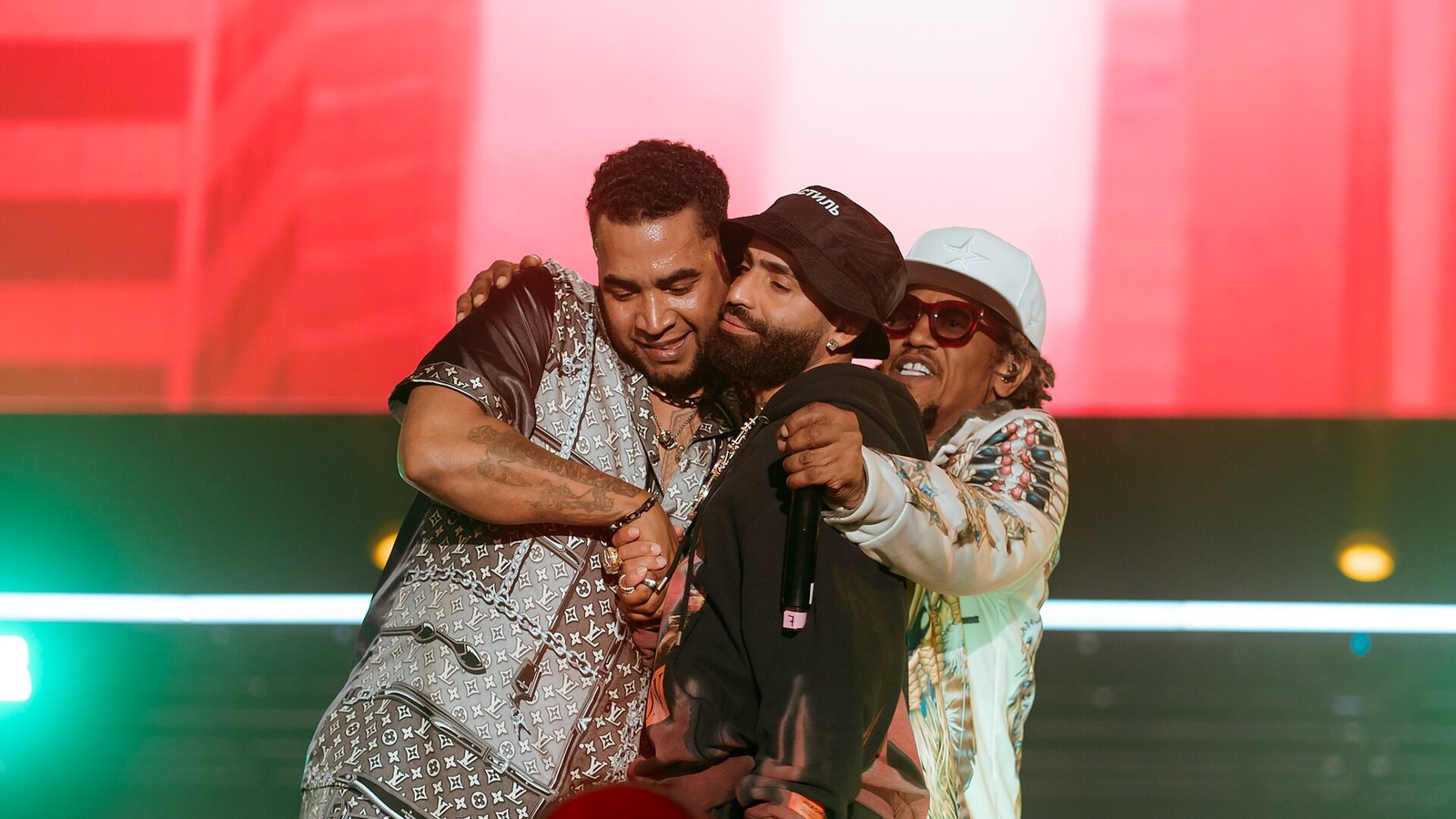
Photo: Don Omar, Arcángel and Tego Calderón on stage. Sickscott01 (CC BY-SA 4.0), via Wikimedia Commons; cropped.